
Some artists sold millions of records and still had to fight for control, access, or fair value from the music they created.
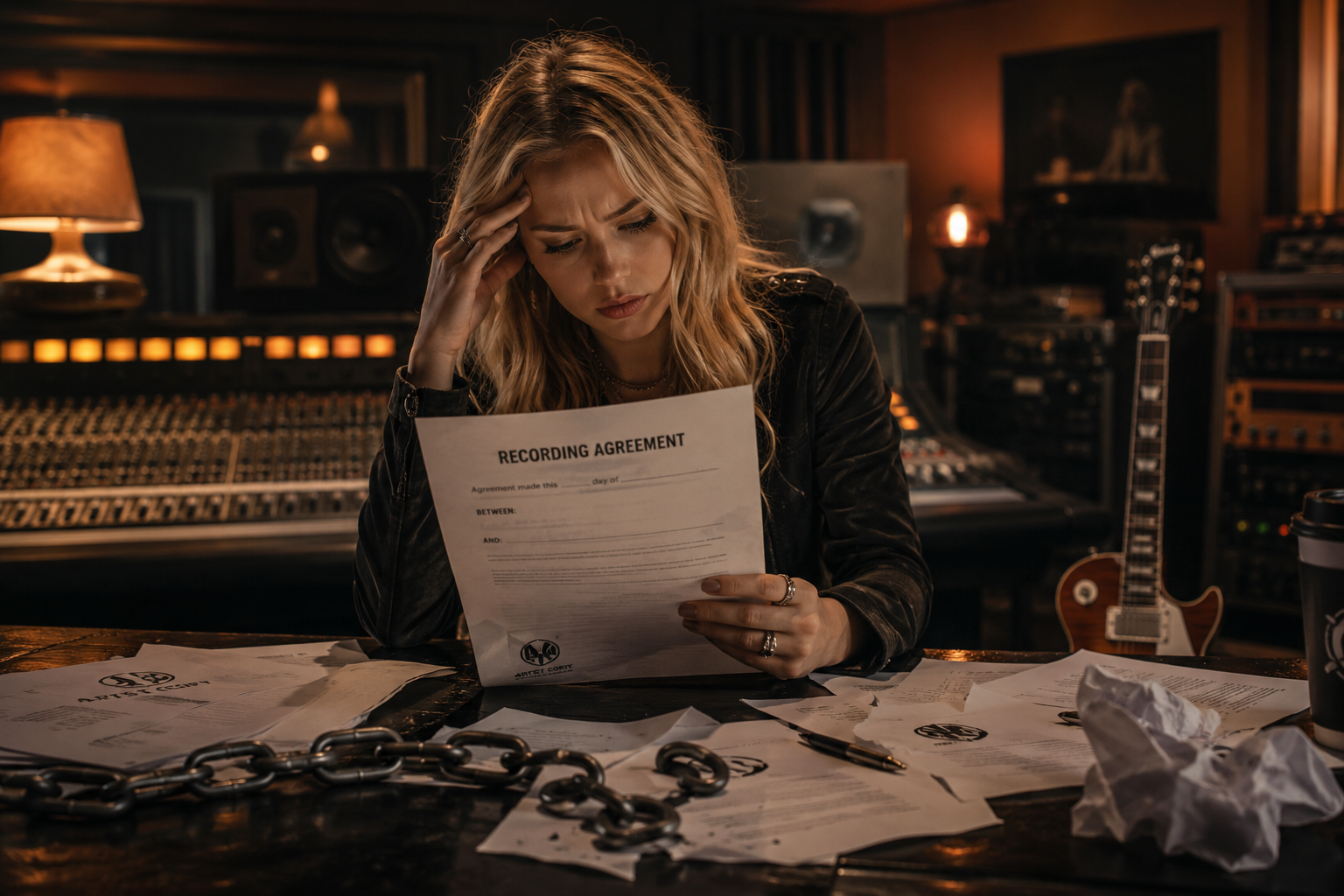
Everybody wants the deal until they learn what the deal actually says.
The advance looks good. The label sounds excited. Somebody tells you this is the opportunity you have been waiting for. Now everybody is celebrating before anyone has taken the time to understand ownership, recoupment, options, release commitments, accounting, or how the relationship ends.
Slow down.
A bad song may cost you a release.
A bad contract can cost you years of work, control of your catalog, and money generated long after the excitement is gone.
Some of the biggest artists in music have learned that lesson publicly. Their situations were different, but the warning is the same: success does not automatically protect you from a bad agreement.
1. Taylor Swift: Know Who Owns the Masters
Taylor Swift’s fight over her first six albums became one of the most visible master-ownership disputes in modern music.
Her early recordings were owned through her former label, Big Machine. When the company was sold in 2019, those masters changed hands as part of the deal.
Swift responded by re-recording much of the catalog and releasing new versions she controlled. In 2025, she announced that she had finally purchased the original masters and related materials.
That ending is powerful, but do not miss the beginning.
The artist created the music, performed the music, built the audience, and still did not initially own the sound recordings.
The lesson is not that every new artist can demand every master on day one. The lesson is that you need to know exactly who owns the recordings, how long they own them, whether ownership can revert, and what rights you retain.
Prince: Creative Freedom Can Be Limited by the Contract
Prince was one of the most talented and productive artists the industry had ever seen.
That did not stop him from having a public battle with Warner Bros. over ownership, release control, and how frequently he could put out music.
His contract gave Warner ownership of his masters and limited the release schedule even though Prince was creating music faster than the label wanted to release it.
He famously protested the relationship, changed his professional name to a symbol, and appeared publicly with the word “slave” written on his face.
Prince eventually regained ownership of his Warner catalog through a later agreement, but the fight lasted years.
Talent does not cancel contract language.
You can be a genius and still be restricted by the term, delivery requirements, release schedule, ownership provisions, and options you agreed to.
De La Soul: A Catalog Can Exist Without Being Available
De La Soul built one of hip-hop’s most respected catalogs, but much of their early music remained unavailable on major streaming platforms for years.
The problems included label control, old sample-clearance complications, and disagreements over how the digital catalog would be handled.
Think about that.
The music existed. The audience wanted it. The culture respected it. But the business structure around the catalog kept it from being fully available in the modern marketplace.
After Reservoir acquired Tommy Boy Music, the companies worked with De La Soul and the group’s label to bring the early catalog to streaming services in 2023.
Your catalog is not only a collection of songs.
It is a collection of rights, contracts, samples, metadata, permissions, and relationships. If those pieces are not organized, the music may become difficult to release, license, sell, or even make available to your own audience.
4. Frank Ocean: Understand How the Contract Ends
Frank Ocean’s exit from Def Jam became an important lesson in contract fulfillment and independence.
In August 2016, he released the visual album Endless, which reportedly completed his contractual obligation to the label. The following day, he independently released Blonde through his own operation.
The point is not to copy Frank Ocean’s strategy. Your contract may be completely different, and clever internet advice is not legal counsel.
The lesson is that the ending matters.
What counts as delivery? How many projects are required? Does the label have options? Is there a release commitment? What happens to unreleased recordings? When are you free to work somewhere else?
Artists spend so much time trying to get into deals that they forget to study how they will eventually get out.
5. The Advance Is Usually Not Free Money
An advance can change an artist’s life.
It can pay for recording, housing, content, touring, marketing, equipment, and the time needed to focus on the music.
But an advance is generally money the label expects to recoup from the artist’s share of future income.
That means the artist may appear successful while the account remains unrecouped.
You need to know what expenses are recoupable.
Recording costs? Videos? Tour support? Independent promotion? Legal fees? Marketing? Travel? Producer advances?
A large deal can create a large debt against your royalties.
Do not only ask how much the advance is.
Ask what has to happen before you receive another dollar.
6. The Percentage Is Not the Whole Deal
Artists love talking about percentages.
“I get fifteen percent.”
“I get fifty percent.”
“I own part of this.”
Cool. Fifteen percent of what?
Before or after which deductions?
Based on retail, wholesale, net receipts, or profit?
Does the company recover its costs first? Are there reserves? Are different income streams cross-collateralized? Can one project’s debt be recovered from another project’s earnings?
A percentage without a clear definition is decoration.
You need to understand how the money is calculated, when statements are delivered, whether you can audit the books, and what expenses can be deducted before your share is calculated.
7. Desperation Is Expensive
A lot of bad agreements begin with desperation.
The artist is tired of being independent. The team wants validation. Somebody believes any label is better than no label. The advance feels like proof that the struggle is over.
That is when people stop asking questions.
Do not let excitement negotiate for you.
Know what you need from the company. Know what you are giving up. Know what the company is obligated to deliver. Know the term. Know the options. Know who owns the master. Know what happens if the music is never released.
Most importantly, have a qualified entertainment attorney review important agreements.
Your cousin who once managed a rapper is not legal counsel.
Getting signed is not automatically winning.
A deal should create opportunity, resources, reach, and support that would be difficult to build alone. In return, the company will expect rights, income, control, or some combination of all three.
That exchange must make sense.
Taylor Swift’s masters, Prince’s release fight, De La Soul’s delayed digital catalog, and Frank Ocean’s contract exit involved different circumstances. But every story points back to the same foundation:
Understand the agreement before the agreement controls the future.
Do not sign because you are excited.
Do not sign because you are tired.
Do not sign because someone told you this is your only chance.
A bad song can be replaced.
A bad deal may follow the artist for years.
Do You Understand What You Are Signing?
Before you commit your masters, publishing, income, or career to an agreement, understand the rights, obligations, costs, and exit terms involved.
YOUR FOUNDATION MATTERS
Do you know what is missing from your artist foundation?
Use the RadMedia Artist Foundation Assessment to identify the areas that need attention before your next release.